
 As the newly elected executive vice-president of the association, I was in line to become the next president. Normally the president would have chaired the meeting but he’d been called home to deal with an emergency. I got a message from an administrator telling me I had to chair the meeting fifteen minutes before it was scheduled to begin. I wasn’t worried. I had the agenda that had been sent to the new board members, and running a meeting didn’t seem all that different from meeting new students at the beginning of a semester.
1 Comment
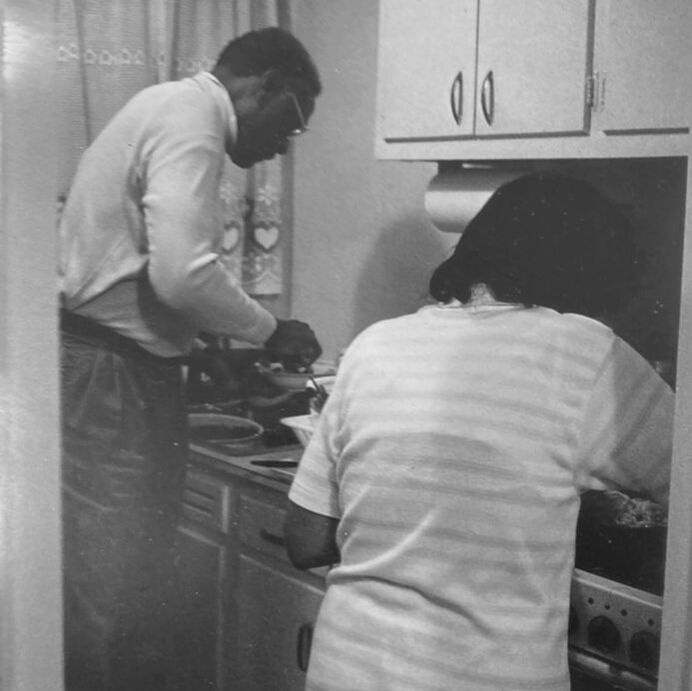 He was Black. I was white. He was tall. I was short. He was a southern Baptist. I was a northern Jew. He was a scientist. I taught world literature. He dressed with elegance. I favored loose-fitting ethnic clothing. He lived in the city. I lived in a small community about seven miles away. He grew up in the south in a time of overt segregation. I grew up in the north in a time of mostly covert segregation. He was married. I was divorced. Outwardly we were totally different.
 At 16, I was hired to be a junior counselor at a camp for “underprivileged kids.” We were in a building with a tin roof while outside, a storm was raging, rain pounding relentlessly, flashes of lightning cutting through the too-sudden darkness, cracks of deafening thunder making us all jump. The girls began to cry hysterically, clutching each other, terrified.
 Between my junior and senior years of college I was hired to be a recreational therapist in a large mental hospital, in charge of a building of 300 women. When my supervisor told me I had to meet with a psychiatrist, my first thought was to wonder what I’d done, if I was somehow going to be transformed from staff to patient.
The psychiatrist, a bear of a man, did not waste time. “Miss Rubin, I hear you’re a storyteller. We have some children who are patients here. Your supervisor has changed your schedule so you have time to tell stories to the children for half an hour three times a week.” What I didn’t say was: What? Me? Work with mentally ill kids? I don’t know anything about mentally ill kids. “You can begin now. A staff member will take you to their playroom.”  In the fall of 1984 I had a grant from the University of Delaware to do storymaking projects with faculty, returning adult students, undergraduates, graduates, and administrative units. Each group was formed by participants who signed up for the classes and workshops.
The faculty who chose to participate came from a variety of fields—business, science, arts, humanities, social sciences—and most did not know each other. All went well until the fifth and next to last, session. |
Monthly StoriesStories inspired by world tales to challenge and comfort. Archives
July 2025
Categories |
 RSS Feed
Copyright © Nancy King 2020 | Site Design by Angulo Marketing & Design
|
|
Nancy King is a widely published author and a professor emerita at the University of Delaware, where she has taught theater, drama, playwriting, creative writing, and multidisciplinary studies with an emphasis on world literature. She has published seven previous works of nonfiction and five novels. Her new memoir, Breaking the Silence, explores the power of stories in healing from trauma and abuse. Her career has emphasized the use of her own experience in being silenced to encourage students to find their voices and to express their thoughts, feelings, and experiences with authenticity, as a way to add meaning to their lives.
|