
 I was at a family Seder in 1963, talking to an aunt about the women’s exercise classes I was teaching at a local Jewish Community Center. When I mentioned that I’d started with one class of four and was now teaching three full classes with a waiting list, a cousin’s husband who’d overheard asked if he could talk with me.
He invited me to go outside and sit on porch chairs where we could talk privately. He told me he worked in publishing and asked a lot of questions about what I was teaching the women, how the increase in numbers of classes happened, and why I thought the women were so responsive. I told him the women generally had bad feelings about their bodies, were not in good shape, and thought the classes were helping them feel better in a lot of ways. “I think we have a lot to talk about,” he said, giving me his card. “Call me next week so we can arrange a time to meet.”
1 Comment
 In January 1985 I was hospitalized for 19 days in London with an unknown illness and an unexplainable low white cell count. In April 1985 doctors at the National Cancer Institute (NCI) finally diagnosed my condition—hairy cell leukemia (HCL), a rare disease made even more rare because I had an anomalous form and only 25 % of the 400 people currently diagnosed were women. When I saw my hematologist, he told me there was an HCL protocol—a trial program of experimental medicine—but I wasn’t sick enough to participate and wouldn’t recommend me.
 My second novel, Morning Light, was published to good reviews and I’d been invited to do a book signing and reading at a well-known bookstore in Albuquerque. I drove down in high spirits, looking forward to sharing my work. The staff assured me they had done enough publicity to expect a good number of people to attend.
I arrived early, signed copies of my novel, and helped the bookstore staff arranged them on a table. It was my first bookstore reading and I was excited and apprehensive, relieved when a woman walked in, took a seat in the second row, and patiently waited. I smiled at her, inwardly worried when no one else appeared to be attending.  I signed up for a series of group ski lessons, wanting to increase my confidence and hone my skills. There were five of us at the first lesson—four men and me. The instructor chatted and joked with the men, leaving me to wonder whether I should quit the class and ask for my money back. I decided to stay and followed the men who followed the instructor, which in itself was sort of a victory as they were more skilled and their pace was faster than mine.
It snowed the next Monday with a fierce wind making driving conditions hazardous on the road to the ski basin. There was a blurb on the skisantafe website: Winter road conditions. 4-wheel, all-wheel, snow tires highly recommended. I could not force myself to drive up to my ski lesson. Missing one class out of five didn’t seem terrible. 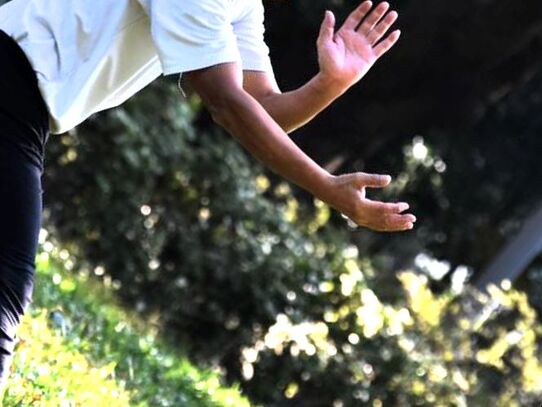 We meet regularly in a local park for an hour’s tai chi lesson. Usually there are anywhere from about six to a dozen people participating. I’m happy to blend in with the group because it’s less likely my conflicted feelings about whether I want to continue participating will show. Having to remember complicated sequences of physical moves irritates and frustrates me, yet it’s a centuries old technique and part of me appreciates the ages-old activity and tradition.
One morning, when I arrived for the class, the teacher was going through one of the sequences. I followed his motions, waiting for people to show up. After a while, the teacher stopped what he was doing. No one else had appeared. He did not look happy. I offered to leave. He nodded. I put my sweater back on, picked up my bag, and started walking away, feeling like I didn’t matter. |
Monthly StoriesStories inspired by world tales to challenge and comfort. Archives
July 2025
Categories |
 RSS Feed
Copyright © Nancy King 2020 | Site Design by Angulo Marketing & Design
|
|
Nancy King is a widely published author and a professor emerita at the University of Delaware, where she has taught theater, drama, playwriting, creative writing, and multidisciplinary studies with an emphasis on world literature. She has published seven previous works of nonfiction and five novels. Her new memoir, Breaking the Silence, explores the power of stories in healing from trauma and abuse. Her career has emphasized the use of her own experience in being silenced to encourage students to find their voices and to express their thoughts, feelings, and experiences with authenticity, as a way to add meaning to their lives.
|